Kitchen Air Purifier Guide
Kitchens are the primary source of indoor air pollution for many families. From fine particulate matter created by high-heat searing to VOCs and odors, the kitchen needs a specialized approach.
Not a Range Hood Replacement
An air purifier is a supplement to, not a replacement for, a properly vented range hood. Your range hood should be your first line of defense for steam and heavy grease; the air purifier manages what the hood misses.
Cooking Particles and PM2.5
Cooking—especially on gas stoves or high-heat frying—releases millions of tiny particles into the air. These particles, known as PM2.5, are small enough to enter your bloodstream through your lungs. A True HEPA filter is essential in or near the kitchen to capture these fine particulates before they drift into the rest of your home.
Neutralizing Kitchen Odors
That "yesterday's fish" smell isn't a particle; it's a gas. HEPA filters are useless against odors. To neutralize cooking smells, you need an air purifier with Activated Carbon. Carbon pellets adsorb the nitrogen and sulfur compounds that make up food odors, effectively scrubbing them from the air.
The Grease Problem
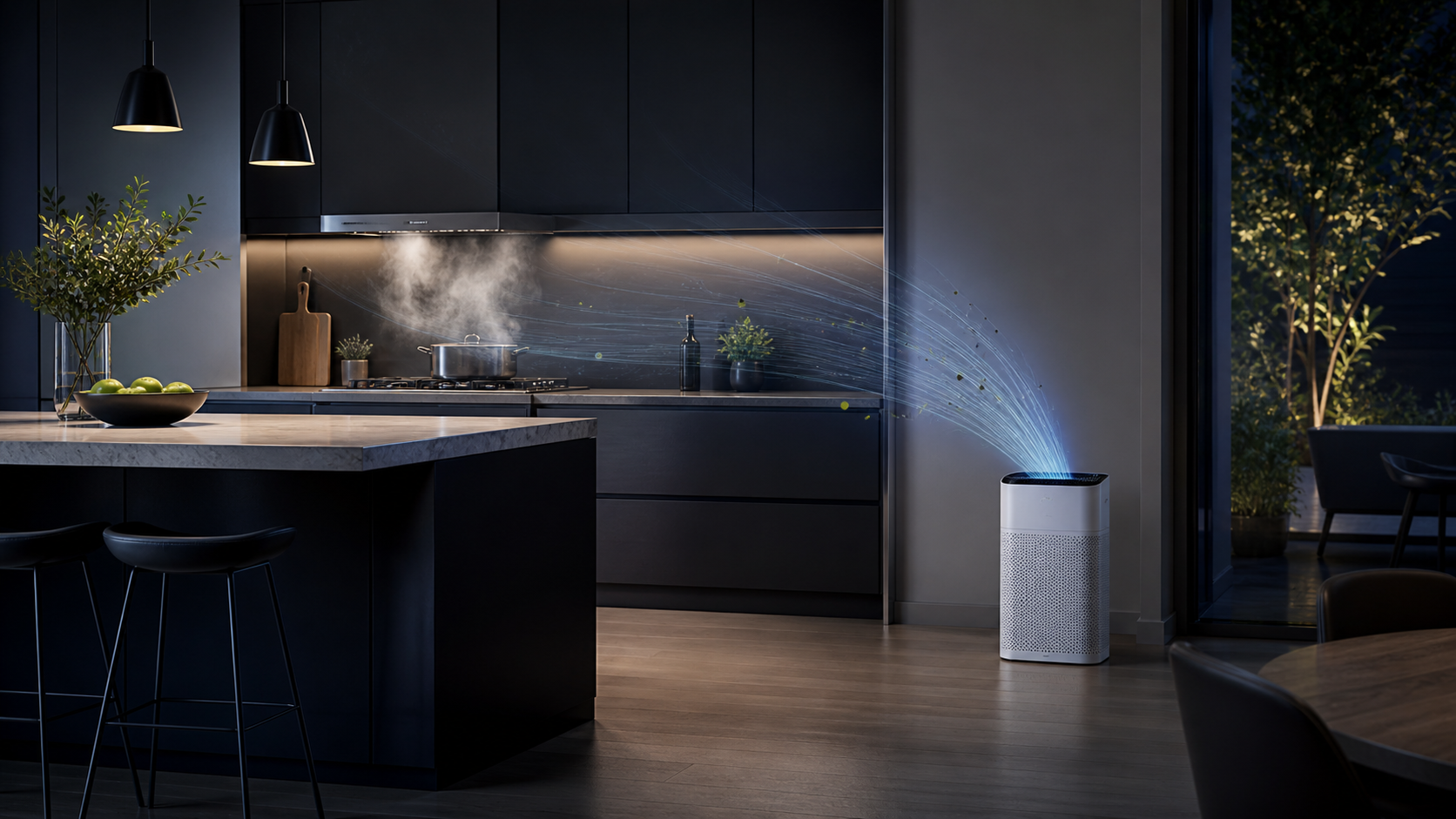
Kitchen air is often "sticky" due to vaporized oils and grease. If you place an air purifier too close to the stove, this grease will coat the filters, clogging them prematurely and potentially damaging the motor. For this reason, we recommend placing your kitchen purifier in the adjacent dining or living area, or at least 10–12 feet away from the cooking surface.
Sizing for Open Kitchens
If your kitchen is part of an open-concept living area, you must size the purifier for the entire volume of the combined space. A small "kitchen-sized" unit will be overwhelmed as air circulates through the larger room.
Calculate Your Kitchen Area Needs
Use our sizer to determine the CADR rating needed for your kitchen or open dining area.
Open Calculator →Maintenance in the Kitchen
Kitchen air purifiers require more frequent maintenance than those in bedrooms. We recommend:
- Weekly pre-filter cleaning: Vacuum the outer mesh or pre-filter every week to remove large dust and any grease buildup.
- Monitor the carbon: If cooking odors aren't being removed as quickly as before, it's likely the carbon filter is "full" and needs replacement.
FAQ
Can an air purifier help with a gas stove's nitrogen dioxide (NO2)?
While standard carbon filters can capture some NO2, it requires a very specific type of treated carbon (often called "chemi-sorbents"). For gas stove emissions, the best solution remains using your range hood and opening a window when possible.
Is it okay to put my air purifier on the kitchen counter?
As long as it's away from the sink (to avoid water splashes) and at least 6 feet from the stove (to avoid grease), a counter-top placement is fine and can help catch particles at head-height.
Related Guides:
HEPA vs. Carbon Filters | Placement Guide