Air Purifier for Smoke Guide
Whether it's from a kitchen mishap, a nearby wildfire, or secondhand tobacco smoke, smoke is one of the most difficult indoor air pollutants to manage.
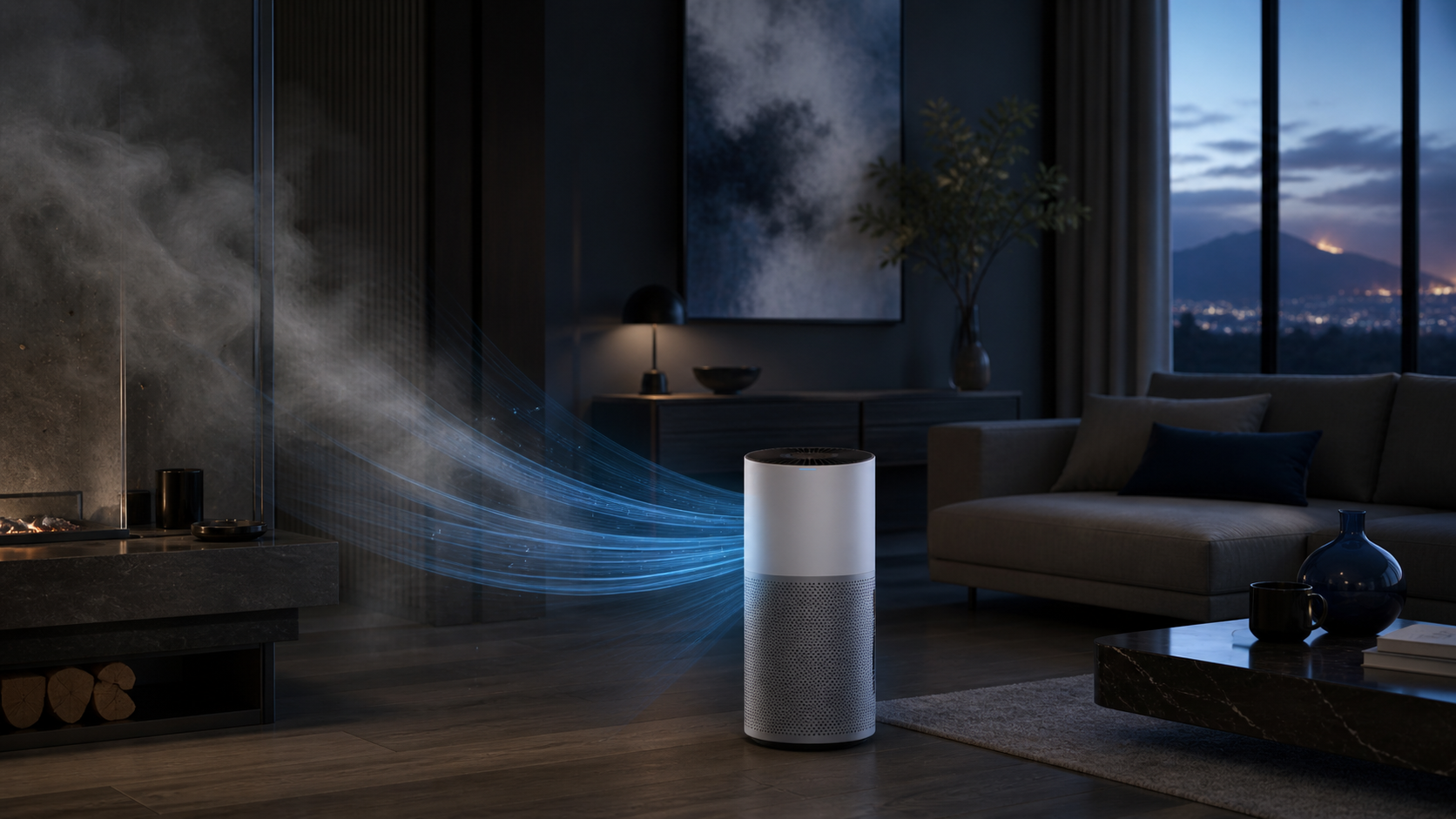
The Dual Nature of Smoke
Smoke is not a single substance. It is a complex mixture of solid particles (ash, soot, and fine particulate matter like PM2.5) and gaseous pollutants (VOCs, carbon monoxide, and odors). To effectively clean smoke from the air, you need a two-pronged attack.
HEPA for the Particles
The solid part of smoke consists of microscopic particles that are incredibly harmful to the lungs. True HEPA filters are exceptionally good at capturing these particles, including PM2.5, which is small enough to enter the bloodstream. During a wildfire event, your HEPA filter is your primary defense.
Activated Carbon for the Odors
The "smell" of smoke comes from gases. HEPA filters cannot trap gases. To remove the odor and harmful VOCs associated with smoke, you must have an air purifier with a substantial activated carbon filter. A thin, carbon-coated mesh will be saturated in hours during a heavy smoke event; look for units with several pounds of actual carbon pellets.
Sizing for Smoke Events
Smoke events are high-intensity pollution events. While 4 Air Changes per Hour (ACH) is standard for normal days, during a wildfire or heavy smoke event, we recommend aiming for 6 to 8 ACH. This high cycle rate is necessary because smoke particles are constantly infiltrating from outdoors, and you need to filter them out faster than they arrive.
Get Your Smoke CADR Target
Select "Smoke" in our calculator to automatically calculate for a high ACH target and see recommended units with heavy carbon filtration.
Calculate for Smoke →Sealing the Gaps
An air purifier can only do so much if smoke is pouring in through leaky windows or doors. During smoke events:
- Keep windows closed: Ensure all seals are tight.
- Recirculate air: Set your HVAC system to recirculate rather than bringing in fresh (smoky) outdoor air.
- Focus on one room: If the smoke is severe, pick one room (like the bedroom), seal it off, and run your best purifier on high.
Maintenance During Wildfires
In heavy smoke, filters can clog 10x faster than normal. During wildfire season:
- Check pre-filters daily: They may need vacuuming every few days.
- Replace HEPA early: If you've lived through a month of heavy smoke, your "6-month" filter is likely ready to be retired.
- Trust your nose: If you start smelling smoke inside while the purifier is running, the carbon filter is likely exhausted.
FAQ
Will a cheap air purifier help with wildfire smoke?
A small, underpowered purifier is better than nothing, but it will likely struggle to keep up with the volume of smoke. If you're on a budget, it's better to build a "Corsi-Rosenthal Box" (a DIY filter using a box fan and MERV-13 filters) than to buy a tiny tabletop unit.
Does smoke damage air purifier motors?
No, but the heavy particulate load will wear out the filters very quickly. The motor itself is protected by the filters, provided you change them when they are full.
Related Guides:
HEPA vs. Carbon Filters | Why ACH Matters for Smoke