The Battle for Better Air Begins in every room of your home.

Independent tools and reviews to help you choose the right purifier, dehumidifier, or humidifier — sized to your space, your air, and your priorities.

Find Your Size

Why room sizing matters

The air inside your home is, on average, two to five times more polluted than the air outside it. Pollen drifts in through screen doors. Dust mites colonize bedding. Pet dander, cooking particulates, mold spores, off-gassing from furniture — all of it accumulates in the rooms where you live, sleep, and breathe.

The right air purifier, sized to the right room, is the most cost-effective intervention you can make. The wrong one is an expensive paperweight. We’re here to help you tell the difference.

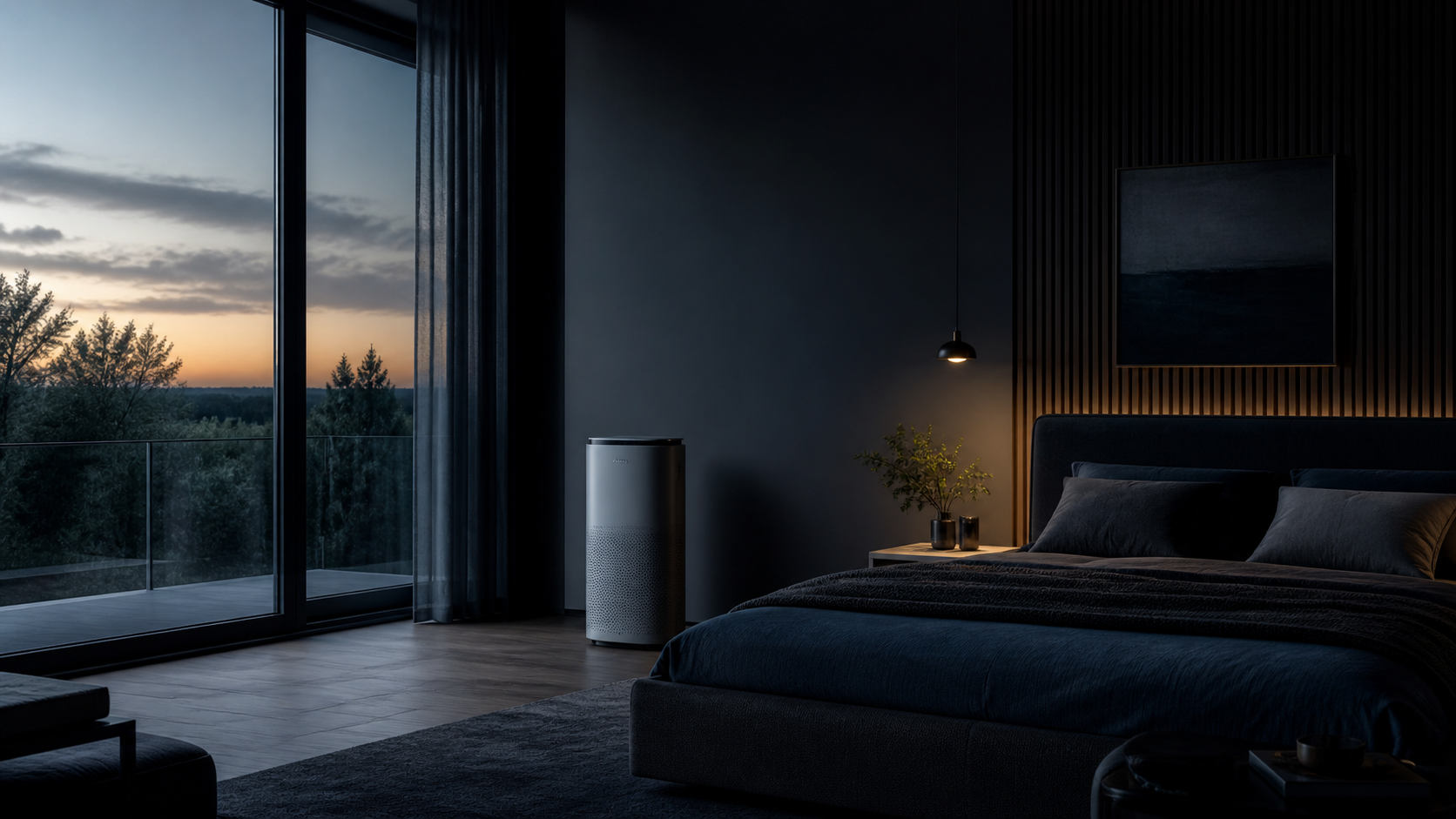
Modern bedroom with an air purifier placed near the bed for cleaner indoor air.
Start with the room where you breathe the longest. For most homes, that means the bedroom.

Tool 01

Air Purifier Sizer

Tell us about your room. We’ll tell you the exact CADR rating you need, why, and which products meet it.

4 ACH = standard. 5+ for allergies. 6–8 for asthma or wildfire smoke.

Recommended for your room

Recommendations will appear here once you calculate your room's requirements.

Why Room Sizing Matters

Buying an air purifier based on the "square footage" printed on the box is a mistake. Here's how to properly size a unit for your actual space.

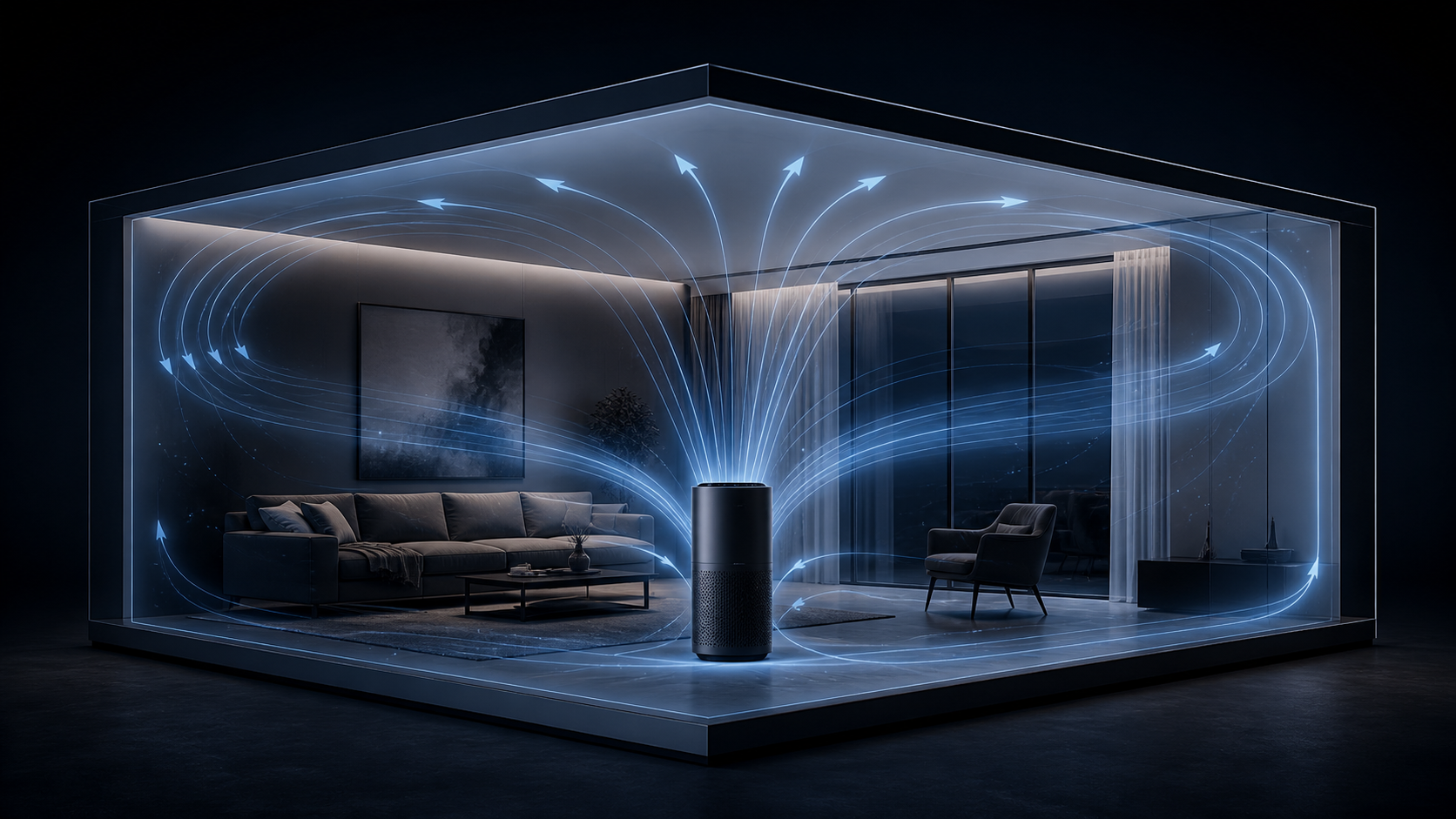
Cutaway room illustration showing airflow circulation from an air purifier.
CADR is about moving enough clean air through the actual room — not guessing from marketing square footage.

CADR is the only number that matters

Square-footage ratings on purifier boxes are often exaggerated marketing. CADR (Clean Air Delivery Rate) is the independently verified measurement of how much filtered air a unit actually delivers per minute. If a product doesn’t publish a CADR, don't buy it.
Bigger isn’t automatically better

An oversized purifier costs more upfront, runs louder on low settings, eats more electricity, and burns through expensive replacement filters faster. A right-sized unit running efficiently on a medium setting beats a giant unit running on low.

Every room has its own air

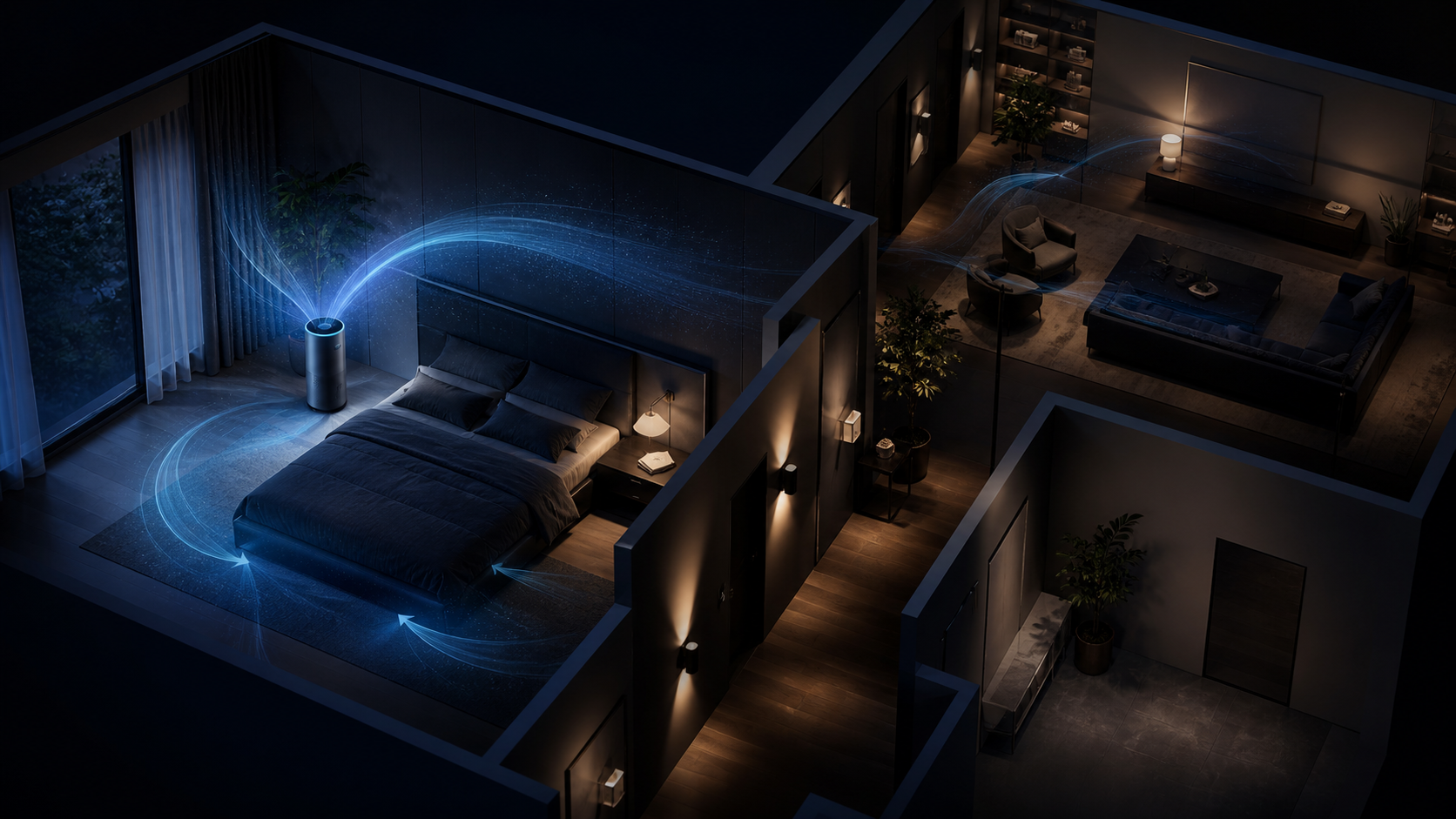
A single “whole-house” purifier is a marketing fiction. Closed doors, hallway turns, and HVAC currents fragment indoor air. You need to put the purifier in the room you actually breathe in — prioritizing the bedroom first.

Modern home cutaway showing a bedroom-focused air purifier strategy.
Closed doors, hallway turns, and room layouts change air movement. Size the purifier for the room you actually use.

How to use the Air Purifier Sizer

Using the air purifier size calculator is straightforward:

  • Enter your dimensions: Input your room length, width, and ceiling height to find your total volume.
  • Choose your main concern: Select what you are trying to filter (allergies, smoke, pets, dust, VOCs, or asthma).
  • Adjust the ACH: The calculator defaults to the recommended Air Changes per Hour based on your concern, but you can adjust it.
  • Check the Required CADR: Use this number as your absolute minimum target when shopping.

Common room sizing examples

Here are a few quick benchmarks for standard rooms:

  • Small bedroom (10×10, 8ft ceiling): Volume is 800 ft³. At 4 ACH, you need a minimum CADR of 83.
  • Primary bedroom (14×16, 8ft ceiling): Volume is 1,792 ft³. At 4 ACH, you need a minimum CADR of 185.
  • Large living room (20×20, 9ft ceiling): Volume is 3,600 ft³. At 4 ACH, you need a minimum CADR of 372 (or two smaller units with 186 CADR each).
  • Wildfire smoke room (12×14, 8ft ceiling): Because smoke requires at least 6 ACH, the required CADR jumps to 208.

CADR by concern

Your primary air quality concern dictates how often you need to cycle the air (ACH) and what type of filter you need:

  • Allergies: Target 5 ACH. A True HEPA filter is required to capture fine pollen and dust mites.
  • Smoke / wildfire: Target 6–8 ACH. You need True HEPA for the ash particles, plus a heavy activated carbon filter to absorb the smoke odor and gases.
  • Pets: Target 4–5 ACH. HEPA handles the dander, but if you want to eliminate pet smells, look for a unit with a carbon pellet filter.
  • General dust: Target 4 ACH. Most standard HEPA air purifiers will perform perfectly.
  • VOCs / odors: Target 4 ACH. Remember that HEPA filters do not capture gases. You must prioritize purifiers with pounds of activated carbon, not just thin carbon sheets.
  • For asthma: People with asthma often prefer higher air-change rates (6–8 ACH) and reliable particle filtration. Note: Always discuss medical concerns with a qualified professional.

Frequently Asked Questions

What CADR do I need for a bedroom?

For a standard 12x14 bedroom with an 8-foot ceiling running at 4 air changes per hour (ACH), you need a minimum CADR of 139. If you have allergies, pets, or asthma, you may want to size up to 5 or 6 ACH, which increases the required CADR.

Is CADR more useful than the square-footage number on the box?

Yes. Square-footage ratings on air purifier boxes are often based on best-case scenarios with low ceilings and minimal air changes. CADR (Clean Air Delivery Rate) is the independently verified measurement of how much filtered air the unit actually delivers per minute.

How many air changes per hour should I use?

4 ACH (Air Changes per Hour) is the standard recommendation for general air cleaning. If you have allergies, 5 ACH is recommended. For asthma or wildfire smoke, 6 to 8 ACH is preferred to keep the air clean.

What size air purifier do I need for wildfire smoke?

Wildfire smoke requires a high CADR for smoke particles, plus activated carbon for the smoke odor. You should calculate for 6 to 8 air changes per hour to ensure the purifier can keep up with heavy particulate loads.

Should I buy one large purifier or smaller room-based purifiers?

It is generally better to use smaller, right-sized purifiers in the individual rooms where you spend the most time (like the bedroom or living room). Closed doors and hallways block airflow, making single whole-house units less effective.

Do air purifiers remove VOCs and odors?

HEPA filters do not remove VOCs (Volatile Organic Compounds) or odors. To remove gases and smells, the air purifier needs a substantial activated carbon filter. A thin carbon sheet is rarely enough for heavy odors.

Why does ceiling height matter?

Air purifiers clean a three-dimensional volume of air, not a two-dimensional floor area. A room with 10-foot ceilings has 25% more air to clean than the same room with standard 8-foot ceilings, requiring a higher CADR.

Why does the calculator multiply by 1.55?

The calculator determines the necessary CFM (Cubic Feet per Minute) to achieve your target air changes, and then applies a 1.55x conversion factor. This reflects AHAM's smoke CADR testing methodology, which measures clean air delivery at a standardized airflow rate. In practice, it also means the purifier comfortably meets your needs on a medium speed setting rather than running at maximum.

More tools, coming soon

We’re building sizing calculators for dehumidifiers, humidifiers, mini-split systems, and whole-house ventilation. Sign up to know when each launches.