Air Purifier for Allergies Guide
For allergy sufferers, the air isn't just invisible—it's a minefield of microscopic triggers. A properly sized air purifier can turn your home back into a sanctuary.
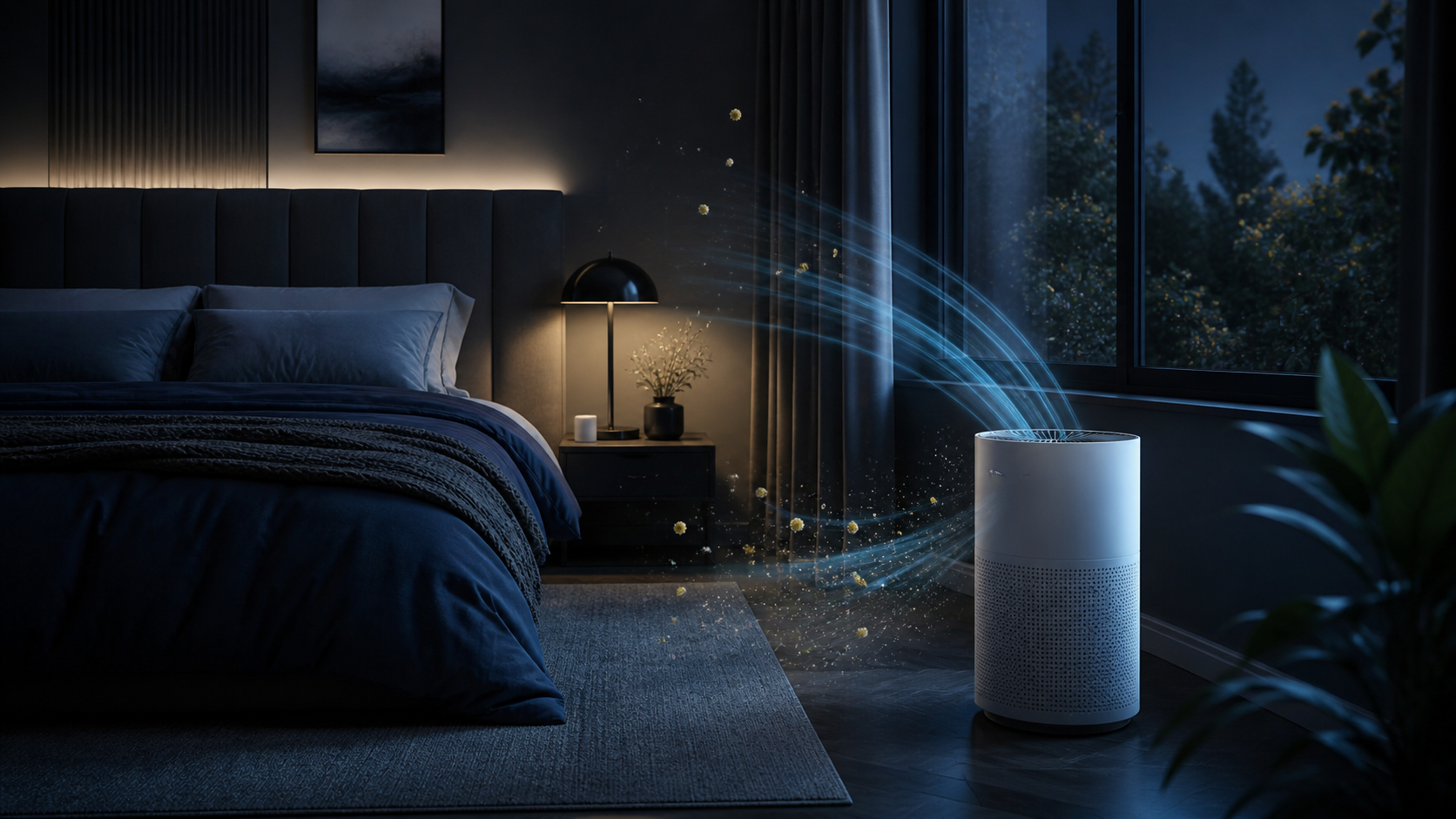
Common Airborne Allergy Triggers
Airborne allergens vary in size and behavior, but the most common triggers share a common trait: they are easily captured by High-Efficiency Particulate Air (HEPA) filters.
- Pollen: Seasonal triggers that drift in from outdoors. Large but lightweight.
- Dust Mite Particles: Actually the waste products of dust mites. Extremely small and found in almost every home.
- Mold Spores: Microscopic fungi that thrive in damp areas.
- Pet Dander: Skin flakes from cats, dogs, and birds.
True HEPA: The Gold Standard
When shopping for an allergy-focused purifier, you must look for True HEPA. Avoid "HEPA-type" or "HEPA-like" filters, which are marketing terms for lower-quality filters that may allow the smallest allergy triggers (like dust mite particles) to pass right through.
ACH: Why Sizing is Critical for Allergies
While 4 Air Changes per Hour (ACH) is the standard for healthy air, we recommend 5 or 6 ACH for people with moderate to severe allergies. The faster you can cycle the air, the less time allergens have to settle on your bedding, rugs, and furniture. Once an allergen settles, an air purifier can no longer catch it—you have to vacuum or wash it away.
Get Your Allergy CADR Target
Our sizer allows you to select "Allergies" to automatically calculate the CADR needed for a 5 ACH target.
Calculate for Allergies →The Bedroom-First Strategy
If you can only afford one air purifier, put it in your bedroom. This is where you spend the longest continuous period of time, and where your respiratory system is most vulnerable. By creating a "clean air oasis" in the bedroom, you give your body a chance to recover from the allergy load it encountered during the day.
Complementary Habits
An air purifier is a powerful tool, but it's part of a larger ecosystem. To maximize its effectiveness:
- Keep windows closed: Especially during high pollen counts.
- Wash bedding weekly: In hot water (130°F+) to kill dust mites.
- HEPA Vacuuming: Use a vacuum with a certified HEPA filter so you don't just blow dust back into the air for the purifier to catch later.
FAQ
Can an air purifier help with hay fever?
Yes. Hay fever is typically caused by pollen. A HEPA air purifier is highly effective at capturing airborne pollen grains, which are relatively large as far as microscopic particles go.
Will an air purifier eliminate dust in my home?
It will significantly reduce airborne dust, but it will not eliminate it. Dust eventually settles on surfaces where the purifier's airflow cannot reach. You will still need to dust and vacuum regularly.
Related Guides:
Bedroom Guide | Pet Dander Guide